Source CE Certified Picosecond Laser for Salon, Home, and Clinic
Compare 30 verified CE Certified Picosecond Laser units for salon, home, and clinic use. Buyers can evaluate models with 1064nm and 532nm wavelengths, pulse durations of 500ps, and various packing options like aluminum cases or wooden crates to find the right pigment treatment instrument.
Key considerations
Products List


Age Spots Treatment High Power New Technology Picosecond Best Picosecond Laser
$14000.00 - $16000.00
MOQ: 1 Pieces


Pico Laser Equipment Real Picosecond Laser Laser Tattoo Removal Machine
$8000.00 - $11000.00
MOQ: 1 Pieces


Laser Picosecond 532 755 1064 Picosecond Laser Tattoo Removal Laser Picosecond
$2000.00 - $6000.00
MOQ: 1 Pieces


ND YAG Laser Pico Laser Tattoo Removal Machine Price Picosecond Laser
$2899.00 - $2999.00
MOQ: 1 Pieces


$3199.00 - $3299.00
MOQ: 1 Pieces

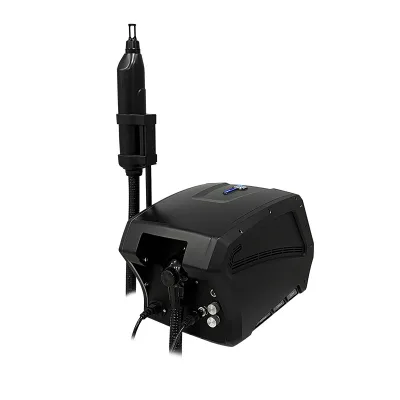

CE Approved Picolaser Q Switched Picosecond ND YAG Laser Machine Pico Laser
$1300.00 - $2100.00
MOQ: 1 Pieces


CE Approved High Quality 755nm Picosecond Laser for Tattoo Removal Machine
$4888.00 - $5600.00
MOQ: 1 Pieces


Professional Picosecond Laser Beauty Equipment 1064nm 532nm 755nm Pico Laser
$1650.00 - $3150.00
MOQ: 1 Pieces

2026 Best Laser Hair Removal Picosecond Multifunctional Laser Machine
$2400.00 - $2600.00
MOQ: 1 Pieces
Comprehensive Sourcing Guide
Strategic Sourcing Guide for CE Certified Picosecond Laser Systems
The global demand for advanced aesthetic equipment has elevated the CE Certified Picosecond Laser to a cornerstone of modern dermatological and salon practices. For procurement professionals, navigating this market requires a disciplined approach that separates verified technical realities from marketing assertions. This guide synthesizes observed market data and established industry standards to provide a framework for acquiring high-performance laser systems. The focus remains on evidence-based evaluation, ensuring that buyers understand the specific attributes, compliance requirements, and operational realities associated with these complex medical devices.
Technical Architecture and Operational Specifications
Understanding the core technology is the first step in any procurement strategy. The term "picosecond" refers to the pulse duration of the laser, which operates in the range of picoseconds (one trillionth of a second). In the observed market data, specific models such as the NBW-PS300 and PS10 demonstrate pulse durations of 500PS, while other configurations like the YC-PA01 and Pico-1 offer variable durations including 300PS and 500PS. This ultra-short pulse duration is critical for the "photoacoustic" effect, which shatters pigment particles into finer dust compared to the thermal effect of nanosecond lasers.
Wavelength selection is equally vital for determining the device's efficacy across different skin types and pigment colors. The supplied data indicates a standard configuration of 1064nm and 532nm wavelengths. The 1064nm wavelength is typically used for deeper pigment removal and black ink, while 532nm targets superficial red and brown pigments. Some advanced units, such as the PS2014, expand this spectrum to include 755nm, which is particularly effective for blue and green pigments. Buyers must verify that the specific unit they are sourcing lists the exact wavelengths required for their target treatment protocols.
Energy stability is a key performance metric that distinguishes high-quality units from inferior ones. Data points suggest that premium systems maintain an energy stability rate of less than 1% for the 1064nm wavelength and less than 2% for the 532nm wavelength. This consistency ensures predictable clinical outcomes and reduces the risk of skin damage due to energy fluctuations. Furthermore, the beam diameter is often adjustable, with observed ranges spanning from 2mm to 10mm. This adjustability allows practitioners to tailor the treatment spot size to the specific area being treated, optimizing both efficacy and patient comfort.
Compliance Verification and Certification Standards
The requirement for CE certification is non-negotiable for procurement within the European Economic Area and many other international markets. However, the presence of a "CE" mark on a product listing must be verified against official documentation. The observed data confirms that CE is a standard certification for these devices, but buyers must also look for additional regulatory approvals depending on the destination market. For instance, specific listings mention CFDA (China Food and Drug Administration) certification and PRC Import & Export Licenses, which are essential for legal importation and distribution in China and often serve as a proxy for rigorous manufacturing standards.
It is crucial to distinguish between the CE mark itself and the specific standards under which it was granted. While the general CE mark is frequently cited, the underlying safety standard for laser products is typically EN 60825-1. This standard classifies laser products based on their potential hazard to the eye and skin. Buyers should request the specific test reports that demonstrate compliance with this standard, rather than accepting a generic claim. The absence of specific test data or the standard number in a product listing should be treated as a red flag, indicating that the compliance status may be unverified.
Additionally, the "ISO" standard is mentioned in the context of certain models like the PS2014. While the specific ISO number is not always detailed in general listings, the presence of ISO certification implies adherence to international quality management systems. Procurement teams should verify the specific ISO standard (e.g., ISO 13485 for medical devices) to ensure the manufacturer maintains a quality management system suitable for medical equipment production.
Cost Drivers and Pricing Structure Analysis
The pricing landscape for CE certified picosecond lasers is highly variable, reflecting differences in technology, build quality, and included services. Observed data indicates a price range from approximately $297 to $150,000 USD. This vast disparity suggests that the keyword "picosecond laser" encompasses a wide spectrum of products, from basic entry-level units to high-end, multi-wavelength clinical systems. The lower end of the price spectrum may correspond to simpler configurations or older technology, while the upper end likely includes systems with advanced features like multiple wavelengths, higher energy stability, and comprehensive software suites.
Several factors drive these costs. First, the complexity of the laser source and the precision of the optical components significantly impact the price. Systems offering three or more wavelengths (1064nm, 532nm, 755nm) generally command a higher price than dual-wavelength units. Second, the build quality and packaging materials, such as aluminum alloy cases or full foam-lined aluminum boxes, add to the manufacturing cost and protect the sensitive optics during transport. Third, the inclusion of after-sales support, such as "technology supports forever" or "free spare parts," is often bundled into the price. Buyers must evaluate whether the upfront cost includes a comprehensive warranty, such as the 1-year or 2-year warranties observed in the market, or if these are separate service contracts.
Typical Applications and Clinical Versatility
The primary application for these devices is pigment treatment, specifically tattoo removal. The data explicitly lists "Laser Tattoo Removal" as a keyword and "Pigment Treatment Instrument" as a type. The picosecond technology is particularly effective for breaking down ink particles from professional and amateur tattoos, often requiring fewer sessions than traditional nanosecond lasers. Beyond tattoo removal, the observed feature sets include "Skin Tightening" and "Pore Remover," indicating a broader utility in aesthetic medicine.
These systems are designed for use in both professional clinical settings and salon environments. The application field is listed as "Salon" and "Home," though the "Non Portable" attribute for some models suggests that many units are intended for fixed installation in a clinic or salon rather than mobile use. However, other models are explicitly marked as "Portable," featuring aluminum cases or air transport packaging, which allows for flexibility in service delivery. The versatility of the device allows practitioners to offer a range of services, from deep pigment clearance to surface-level skin rejuvenation, making it a valuable asset for businesses looking to expand their service portfolio.
Supplier Evaluation and Operational Capabilities
When evaluating potential suppliers, it is essential to look beyond the product listing and assess the manufacturer's operational capabilities. The data indicates that OEM (Original Equipment Manufacturer) and ODM (Original Design Manufacturer) services are available, with some suppliers offering "Professional Design and Production." This capability is crucial for buyers who wish to brand the equipment as their own or require custom configurations. Buyers should verify the extent of these customization options, including the ability to modify software interfaces, packaging, or specific hardware components.
The origin of the product is another critical factor. The majority of the observed data points to "China Beijing" as the production origin. While this does not inherently imply lower quality, it does mean that buyers must navigate international logistics and potential language barriers. Suppliers should be evaluated on their ability to provide clear documentation, technical support in the buyer's language, and a transparent supply chain. The "After-Sale" attributes listed, such as "Online Support" and "Video Technical" assistance, are vital for maintaining equipment uptime. A supplier that offers "Free Spare Parts" can significantly reduce the total cost of ownership, but the terms of this offer must be clearly defined in the contract.
Quality Control and Long-Term Procurement Considerations
Quality control in the laser industry extends beyond the initial manufacturing process to include rigorous testing and packaging standards. The observed data highlights various packaging methods, including "Aluminum Box," "Wooden Case," and "Air Case," with specific dimensions provided for some models (e.g., 595037cm, 20kg). These details are not merely descriptive; they indicate the level of protection provided during shipping. For high-value equipment, the use of air transport packaging and foam lining is essential to prevent damage to sensitive optical components.
Long-term procurement considerations must include the warranty and maintenance lifecycle. The market offers warranties ranging from 1 to 2 years, with some suppliers promising "Technology Supports Forever." Buyers should scrutinize what "forever" entails, as it may refer to software updates rather than hardware replacement. The "Energy Stability Rate" and "Pulse Duration" are metrics that can degrade over time; therefore, a robust maintenance plan is necessary. Suppliers should provide a clear schedule for calibration and servicing to ensure the device continues to meet the observed performance standards, such as the <1% energy stability rate.
Comparative Analysis of Key Product Attributes
To facilitate decision-making, the following table summarizes the key attributes observed across different product models in the market. This comparison helps buyers identify which specifications align with their specific operational needs.
| Attribute | Model NBW-PS300 | Model PS10 | Model PS2014 | Model Pico-1 | Model YC-PA01 |
|---|---|---|---|---|---|
| Pulse Duration | 500PS | 500PS | 500PS/300PS | Not Specified | Not Specified |
| Wavelengths | 1064nm, 532nm | 1064nm, 532nm | 1064nm/532nm | 1064nm/532nm/755nm | Not Specified |
| Portability | Non Portable | Not Specified | Not Specified | Portable | Not Specified |
| Packaging | Aluminum Box | Wooden Case | Air Case | Air Transport | Full Foam + Aluminum Box |
| Certification | CE | CE | ISO | CE | CFDA, PRC Import/Export |
| Warranty | Not Specified | Not Specified | Not Specified | 2 Years | 1 Year |
| Origin | China Beijing | China | China | Beijing China | China |
This table illustrates the diversity in the market. While all models share the core CE certification and picosecond technology, the specific combination of wavelengths, portability, and packaging varies significantly. A buyer seeking a portable unit for mobile services would prioritize the Pico-1 or similar models, whereas a clinic requiring a multi-wavelength system for comprehensive tattoo removal might focus on the Pico-1 or PS2014.
Final Procurement Recommendations
In conclusion, sourcing a CE Certified Picosecond Laser requires a meticulous approach that balances technical specifications, regulatory compliance, and long-term support. Buyers must verify that the observed specifications, such as pulse duration and wavelength, match their clinical requirements. The presence of CE certification should be backed by specific test reports and compliance with standards like EN 60825-1. Cost analysis should consider the total cost of ownership, including warranty terms and spare parts availability, rather than just the initial purchase price. By focusing on these evidence-based criteria, procurement professionals can secure high-quality laser systems that deliver reliable performance and value for their organizations.
FAQs
What certifications are required for CE Certified Picosecond Laser imports?
CE certification is standard, but some units also require CFDA and PRC Import & Export Licenses for legal distribution. Buyers must verify specific test reports against EN 60825-1 to ensure compliance with safety standards before purchasing.
How do pulse durations affect pigment removal efficiency?
Pulse durations of 300PS to 500PS create a photoacoustic effect that shatters pigment particles into finer dust. This ultra-short duration is more effective than nanosecond lasers for breaking down professional and amateur tattoo ink with fewer sessions.
Which wavelengths are available for different skin pigment treatments?
Standard models offer 1064nm and 532nm wavelengths for black and red pigments respectively. Advanced units like the PS2014 include 755nm to target blue and green pigments, expanding the range of treatable colors for practitioners.
Can I find portable CE Certified Picosecond Laser systems for salons?
Some models are explicitly marked as portable with aluminum alloy cases, while others are non-portable for fixed clinic installation. Buyers should check the specific product attributes to determine if the unit supports mobile service delivery or requires permanent setup.
What warranty terms are typical for these laser beauty equipment units?
Warranty periods typically range from one to two years, with some suppliers offering technology support indefinitely. Buyers should clarify if free spare parts are included and verify the scope of online or video technical assistance provided by the manufacturer.
How is energy stability measured in high-quality picosecond laser devices?
Premium systems maintain an energy stability rate of less than 1% for 1064nm and less than 2% for 532nm wavelengths. This consistency ensures predictable clinical outcomes and reduces the risk of skin damage caused by energy fluctuations during treatment.
What customization options are available for OEM and ODM requests?
Suppliers offer professional design and production services allowing for custom branding and hardware modifications. Buyers can request changes to software interfaces, packaging materials like aluminum boxes, or specific hardware components to align with their business requirements.